Method
Daisugi: what the Japanese forest teaches today's leaders
In the 14th century, Japanese foresters invented a strange technique: growing several trunks on a single mother tree. Six centuries later, their method still speaks to leaders in a hurry.
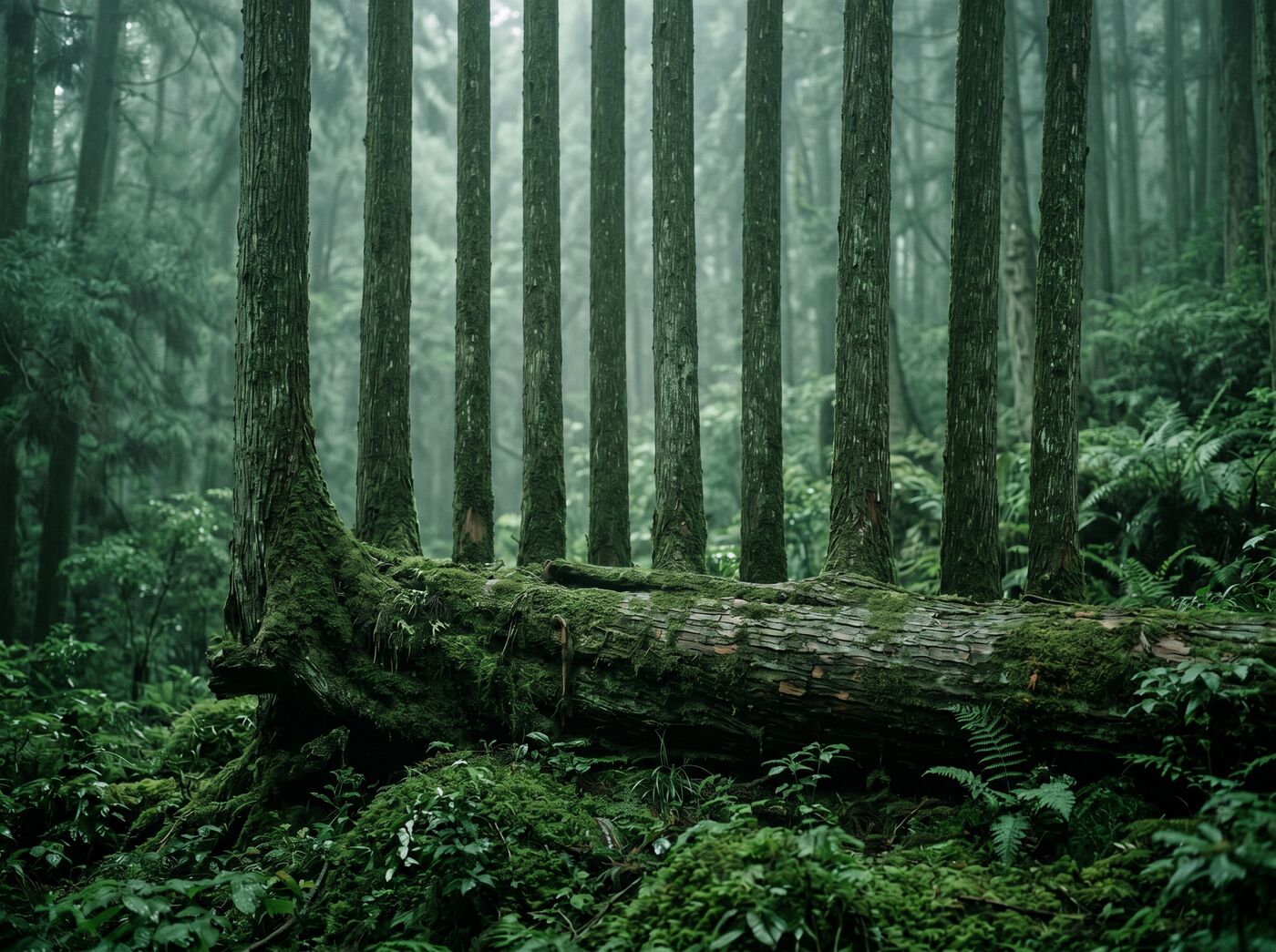
North of Kyoto, in the Kitayama region, a strange forest grows. Cedars rise in clusters, with a massive horizontal mother trunk from which several straight secondary trunks rise like organ pipes, perfectly aligned. They’re called daisugi — literally, “platform cedar”.
This technique was invented in the 14th century to answer a very concrete crisis: the demand for cedar wood to build the Kyoto aristocracy’s villas was exploding, but space to plant new trees was running out.
The Japanese foresters’ answer was brilliant in its sobriety: rather than felling a mature tree, prune it in a specific way so that it grows, on itself, a new generation of trunks.
One root, several harvests
The result fits in a few words:
- A single root system — less surface mobilised.
- Wood that is straighter, denser, more regular than that of young trees.
- Exploitation possible every 20 to 30 years, without replanting.
- Trees that live several hundred years.
Six hundred years after its invention, the method is still in use. Some daisugi forests are now classified cultural landscapes, protected.
Why it’s a management lesson
When I first encountered photos of daisugi, I saw something other than a curious horticultural object. I saw an answer to the change fatigue I’ve been encountering for twenty years in the companies I work with.
Here is what the Japanese forest teaches:
1. Continuity is an asset, not a brake
In dominant managerial rhetoric, anything old is suspect. We speak of legacy with a hint of contempt. The daisugi proposes the opposite: the mother base is what makes the rest possible. The more solid the base, the faster the renewal.
In an organisation, those are the operational know-hows, the stable rituals, the standards that hold. Before reinventing, identify the mother base.
2. We don’t replant — we prune
The daisugi forester never uproots. He prunes. A precise, selective, repeated gesture. He removes what prevents the new growth from rising straight.
In a transformation, there is almost always an excess of layers: past initiatives, unused tools, dead rituals. Pruning — subtraction — comes before renewal.
3. The long term is compatible with rhythm
Six centuries of renewal isn’t the opposite of rhythm. It’s its condition. Each secondary trunk grows at its own pace, but the whole breathes together. The forest never stops being productive.
An organisation that does Lean in campaigns isn’t doing Lean. It’s running internal promotions.
4. Beauty is a sign of viability
Daisugi forests are beautiful — in the original sense: they make a sign. They have a visual coherence that speaks to their viability. When an organisation produces results without producing coherence, it’s exhausting itself.
From daisugi to Denovation
It’s this image — one tree, multiple trunks, one root — that helped me name what I’d been doing for ten years. Denovation isn’t innovation against the existing. It’s innovation from the existing.
We don’t uproot. We prune. We let it grow back straight.
It is probably, in the next two or three decades, the most fertile managerial posture. Because resources are scarce, because change fatigue has become measurable, because organisations need to last more than they need to pivot.
Daisugi is a horticultural method. Read differently, it is also an ethics of transformation.